
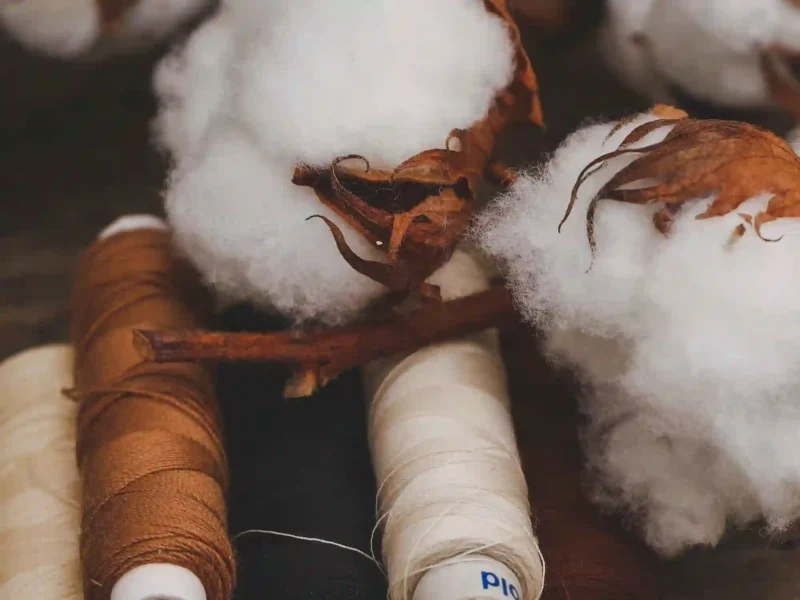
100% Cotton Yarn
- Fiber Composition: 100% natural cotton fibers.
- Origin: Sourced from cotton farms.
- Chemical Details: Free from synthetic chemicals; occasionally treated with mild dyes or finishes.
- Environmental Impact: Eco-friendly, biodegradable, and renewable. Organic options are available for chemical-free alternatives.
Combed Cotton Yarn
- Fiber Composition: 100% cotton, combed to remove impurities and short fibers.
- Origin: Predominantly from nature.
- Chemical Details: Minimal chemical usage; pre-washed for purity.
- Environmental Impact: Environmentally friendly and long-lasting, with organic options further reducing environmental strain.
Cotton-Polyester Blend Yarn
- Fiber Composition: 65% cotton, 35% polyester.
- Origin: Cotton sourced from nature and polyester synthesized in local mills.
- Chemical Details: Polyester involves petrochemical processing; the blend may use chemical dyes.
- Environmental Impact: Less eco-friendly than pure cotton; however, it increases garment durability, reducing waste.
Spandex Blended Yarn
- Fiber Composition: 95% cotton or polyester, 5% spandex.
- Origin: Cotton from nature, spandex fibers are chemically synthesized.
- Chemical Details: Spandex production involves polyurethane; the blend is treated to stabilize elasticity.
- Environmental Impact: Non-biodegradable but highly durable, reducing the need for frequent replacements.
Organic Cotton Yarn
- Fiber Composition: 100% organic cotton.
- Origin: Certified organic farms.
- Chemical Details: Grown without synthetic pesticides or fertilizers, dyed with natural or low-impact dyes.
- Environmental Impact: Highly eco-friendly, with reduced water and energy consumption.
Polyester Yarn
- Fiber Composition: 100% polyester, a synthetic fiber.
- Origin: Produced using petrochemicals in global mills.
- Chemical Details: Created through polymerization of ethylene glycol and terephthalic acid.
- Environmental Impact: Non-biodegradable but recyclable. New technologies help minimize impact.
Tri-Blend Yarn (Cotton, Polyester, Rayon)
- Fiber Composition: 50% polyester, 25% cotton, 25% rayon.
- Origin: Rayon sourced from wood pulp, polyester from petrochemicals, and cotton from farms.
- Chemical Details: Rayon production involves chemical solvents, making the process energy-intensive.
- Environmental Impact: Moderately eco-friendly; recycling options available for polyester components.
Nylon Yarn
- Fiber Composition: 100% synthetic nylon.
- Origin: Produced from polyamide polymers in chemical plants.
- Chemical Details: Created through the polymerization of caprolactam, involving high-energy processing.
- Environmental Impact: Non-biodegradable but highly durable; recycling programs exist to reduce landfill waste.
Modal Yarn
- Fiber Composition: 100% modal fibers derived from beech tree pulp.
- Origin: Sustainably harvested beechwood.
- Chemical Details: Manufactured using less harsh chemicals like sodium hydroxide in a closed-loop process.
- Environmental Impact: Highly sustainable and eco-friendly, with minimal waste and emissions.
Acrylic Wool Blend Yarn
- Fiber Composition: 70% acrylic, 30% wool.
- Origin: Wool from nature; acrylic is chemically synthesized globally.
- Chemical Details: Acrylic involves acrylonitrile polymerization; wool is minimally processed.
- Environmental Impact: Acrylic is non-biodegradable but durable; wool is biodegradable and renewable.
Bamboo Yarn
- Fiber Composition: 100% bamboo or bamboo-cotton blends.
- Origin: Sustainably farmed bamboo from nature.
- Chemical Details: Treated with chemicals like sodium hydroxide and carbon disulfide in rayon production.
- Environmental Impact: Semi-eco-friendly; closed-loop systems reduce harmful emissions during production.
Elastic Yarn
- Fiber Composition: 95% base fiber (cotton or polyester), 5% elastane.
- Origin: Elastane is chemically synthesized; base fiber is globally sourced.
- Chemical Details: Polyurethane-based elastane undergoes chemical treatments to stabilize elasticity.
Environmental Impact: Non-biodegradable but ensures long garment life, reducing overall waste.